
Migrating data from SQL Azure to Firebird
This guide walks you through migrating data from SQL Azure to Firebird in a few simple steps using ESF Database Migration Toolkit. Simplify complex migration tasks and save valuable time with our streamlined approach.Prerequisite:
Software Required:
ESF Database Migration Toolkit »System Supported:
- Windows 7 or higher.
- SQL Azure.
- Firebird 1.5 or higher.
Step by Step Wizard:
-
Configure SQL Azure Connection
- Prerequisite:
- Enable "Allow access to Azure services" in Azure SQL server settings
- Add your client IP under Firewalls and virtual networks
- In the "Choose a Data Source" dialog:
- Select "SQL Azure"
- Enter connection details:
- Server name: e.g.,
esf.database.windows.net - Port:
1433(default) - Authentication: Enter credentials
- Server name: e.g.,
- Load database options:
- Click the Refresh Database button
- Select target database from list
- Load schema options:
- Click the Refresh Schema button
- Choose desired schema
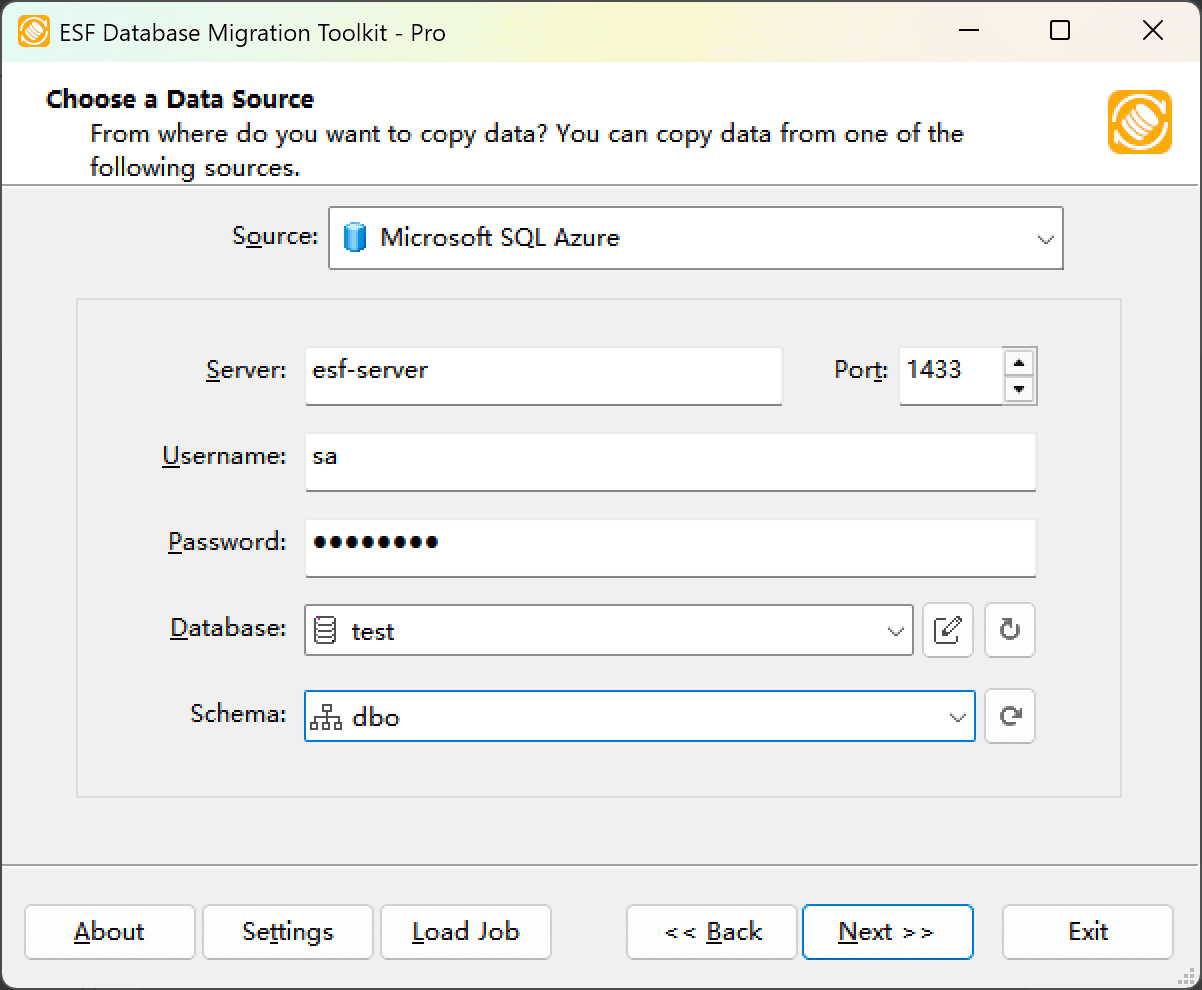
Fig. 1: SQL Azure data source configuration - Prerequisite:
-
Configure Firebird/InterBase Destination
- In the "Choose a Destination" dialog:
- Select "Firebird/InterBase"
- Provide authentication credentials:
- Username: SYSDBA (default)
- Password: masterkey (default)
- Select the database character set from the dropdown
- Database file location:
- Click the "..." button (Browse)
- Select your Firebird (.fdb) or InterBase (.gdb) file
- For server connections:
- Enter server address in format:
<server_name>[/port]:<db_file> - Examples:
- With port:
localhost/3050:c:\temp\test.fdb - Default port (3050):
localhost:c:\temp\test.fdb
- With port:
- Enter server address in format:
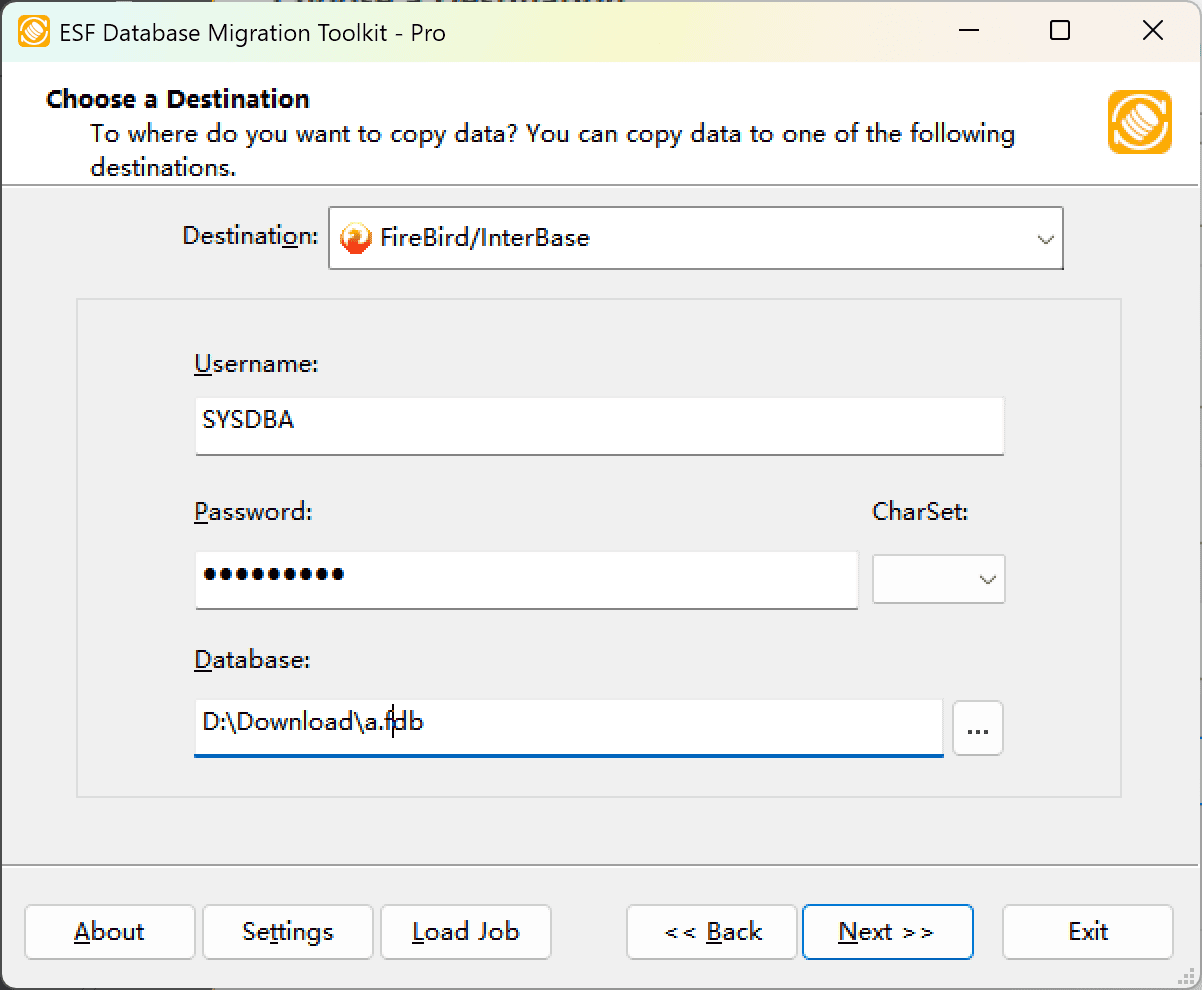
Fig. 2: Firebird/InterBase destination configuration - In the "Choose a Destination" dialog:
-
In "Select Source Table(s) & View(s)" Dialog
-
Select migration objects: Choose tables or views to include in the migration.
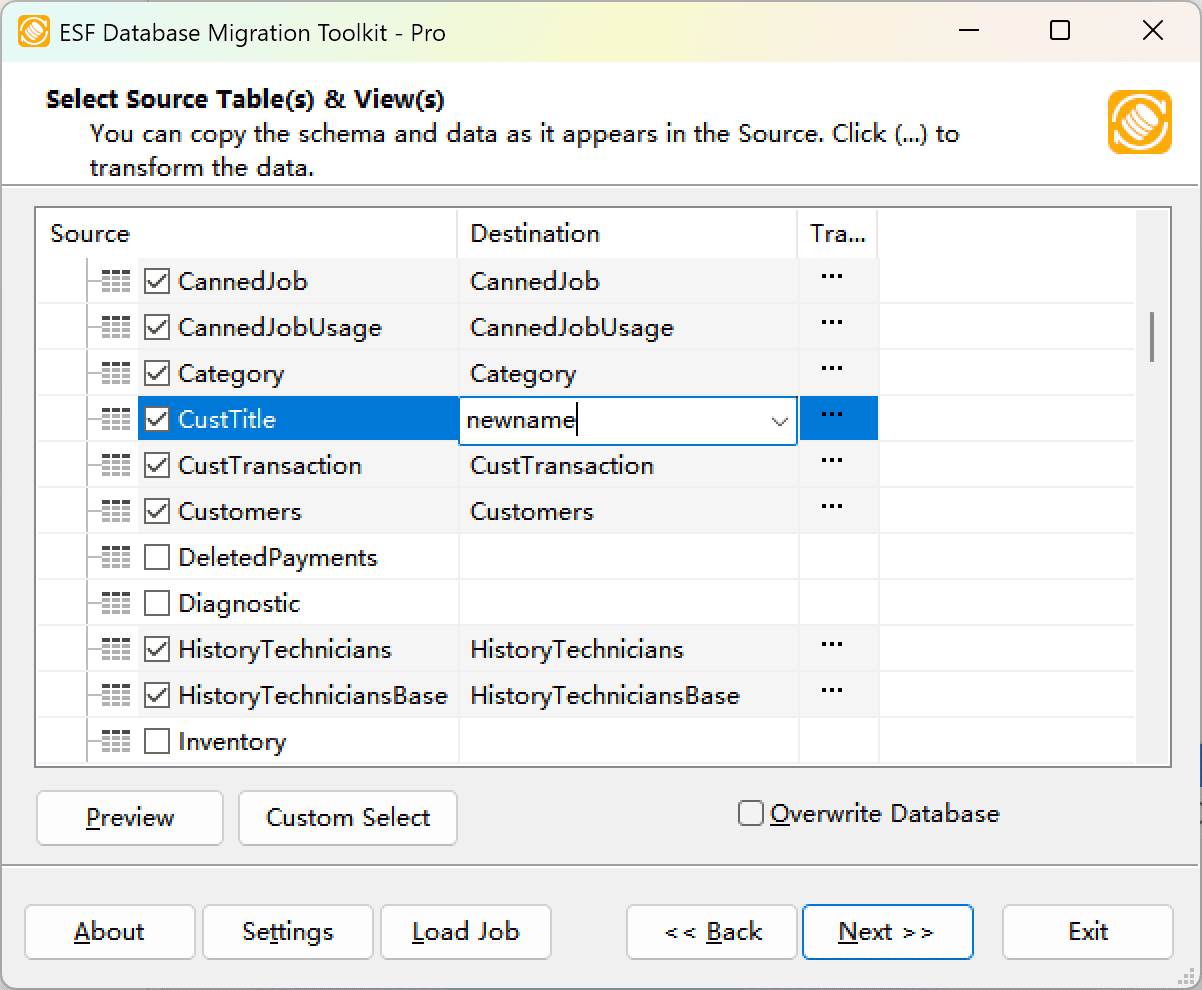
Fig. 3: Select tables and views -
Modify table structure: Click the ellipsis (...) button to access table options and schema adjustments.
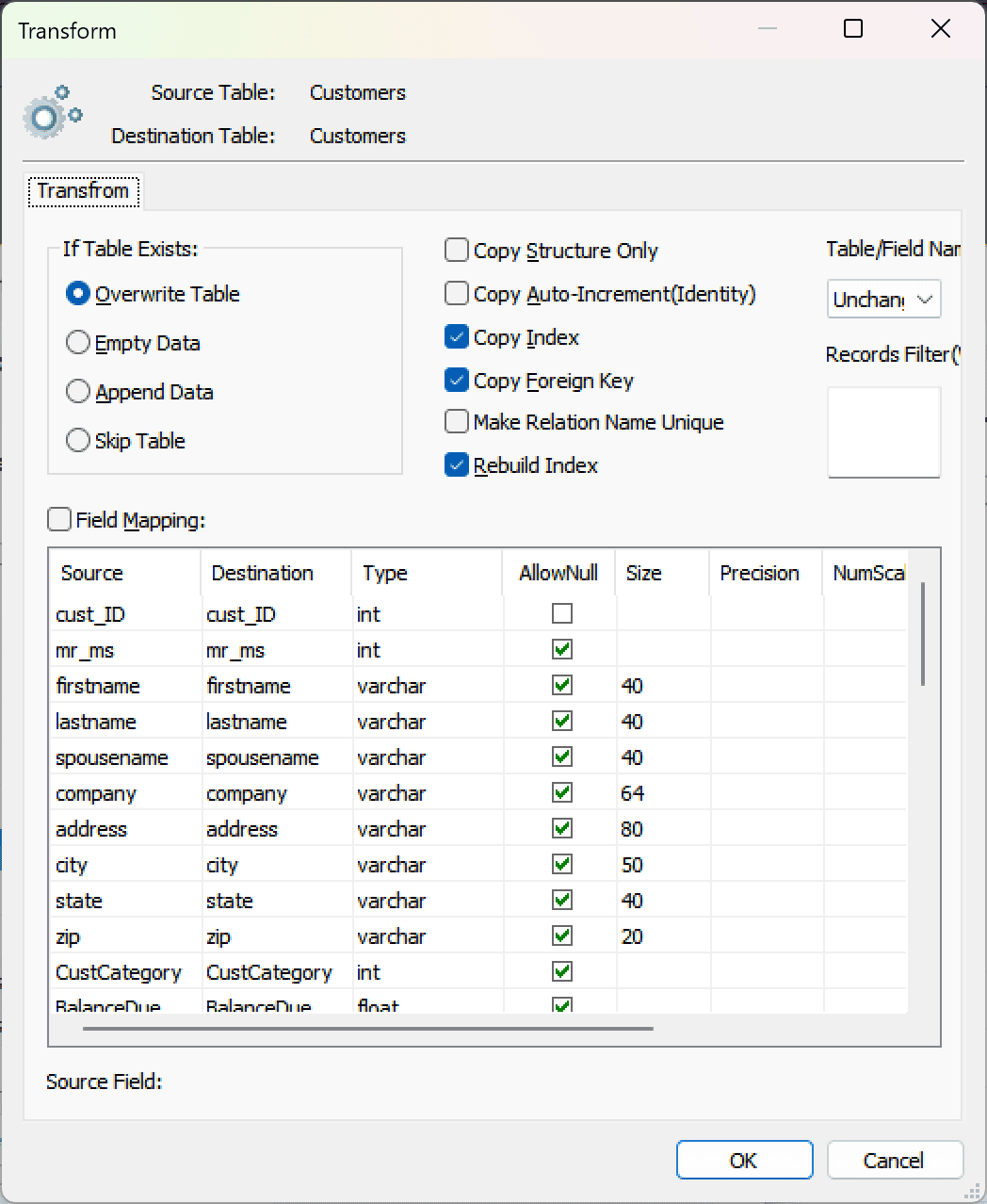
Fig. 4: Do transform -
Configure field mapping: In the Field Mapping options:
- Customize destination fields (name, data type, default value, comments)
- Select data transfer method:
- Overwrite Table (replace existing data)
- Empty Data (truncate before insert)
- Append Data (add to existing data)
- Skip Table (exclude from transfer)
- Apply data filters before transfer
-
Select migration objects: Choose tables or views to include in the migration.
-
Execution Dialog
-
Start migration: Click "Submit" to initiate automated data transfer from SQL Azure to Firebird.
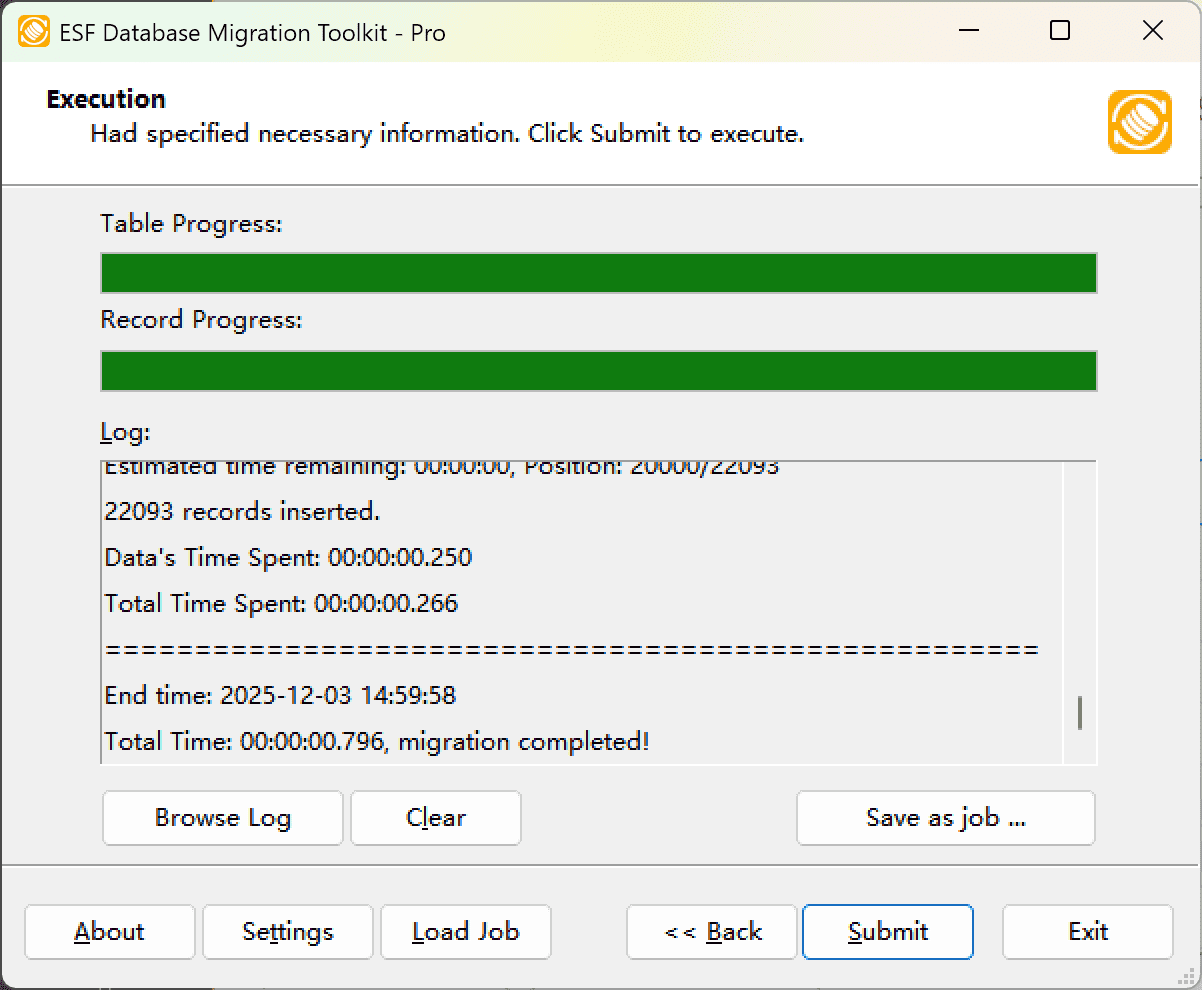
Fig. 5: Execute migration - Monitor progress: Click "Browse Log" for real-time migration tracking, including issue resolution details.
-
Save configuration: Click "Save as job" to store settings for:
- Quick reloads of migration jobs
- Command-line execution (use:
dmtc.exe --helpfor parameter options)
-
Start migration: Click "Submit" to initiate automated data transfer from SQL Azure to Firebird.
-
Finished!
After migration completes, the toolkit generates a comprehensive report for verifying migration accuracy. You can monitor progress as the automated process runs efficiently. For any questions or feedback, contact us – our team is ready to assist.